Makeup Artist in Training Graphics & T-Shirt Designs
As a graphic designer who regularly sources creative assets for commercial projects, I recently had the opportunity to evaluate Makeup Artist in Training for a client brief. The client runs a small handmade cosmetics business and needed a consistent visual language for their packaging, social media presence, and a limited run of apparel. My job was to determine whether this digital product could deliver the right balance of personality and professionalism without requiring extensive custom illustration work.
First Impressions and the Visual Mood It Creates
From the moment I opened the zip file, the visual tone of Makeup Artist in Training struck me as confident and playful. The design elements lean into a modern hand-drawn aesthetic that feels approachable yet intentional. The linework has a natural variation in weight, which gives the graphics a live, energetic feel rather than something mechanically perfect. This is the kind of graphic design asset that can anchor a brand identity for a beauty professional who wants to communicate creativity and expertise without looking overly corporate. The mood is warm, creative, and slightly whimsical, which immediately made me think of boutique product lines, indie beauty brands, and artisan sellers on platforms like Etsy.
Style Fit for a Real Client Project
Makeup Artist in Training sits comfortably in the space between trendy and timeless. The style is not hyper-realistic nor purely minimalist; it finds a middle ground that works well for small business branding, Etsy product listings, and print-on-demand merchandise. For my client, who is launching a boutique line of organic lip tints and highlighters, the aesthetic of this creative design asset complements the handmade, artisanal quality of the products. It feels personal without being amateur, which is a hard balance to strike in commercial design. The asset naturally fits projects that require a human touch, such as brand identity work for salons, beauty bloggers, makeup tutorial channels, or even a classroom project for aspiring makeup artists.
Where Makeup Artist in Training Shines in Layouts
In terms of practical application, Makeup Artist in Training performs exceptionally well in hero graphic roles. On product packaging, the design can serve as a central visual that draws the eye without overwhelming the label copy. On t-shirt designs, the layout holds its own at full chest size or as a smaller left-chest mark. The asset also translates effectively to social media graphics, where the hand-drawn quality stands out in a feed of polished stock imagery. For Pinterest pins and Instagram posts, the design adds a layer of authentic, behind-the-scenes appeal that resonates with audiences looking for genuine connection. When I placed the design on product mockups, the asset maintained its integrity across formats. On a tote bag mockup, the visual weight felt balanced. On a mug, the curve of the design followed the cylinder naturally without distortion. For sticker designs, the details held up well at standard sizes. The PNG files included in the download offer clean transparency, which simplified the mockup process significantly.
Large-Scale Impact and Themed Collections
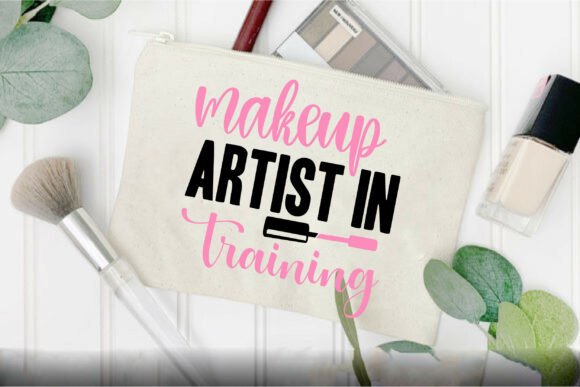
When used in large layout areas, such as posters, flyers, or hero banners for a website, Makeup Artist in Training commands attention. The line quality and spacing create a strong silhouette that works as a standalone focal point. For a themed collection, such as a seasonal campaign or a limited-edition product drop, the asset provides consistent visual DNA that can be carried across multiple formats. I tested it as a sublimation design on a cosmetic bag and as a centerpiece for a blog header, and in both cases, the design maintained its emotional appeal. The commercial design potential is broad, especially for creatives who need a ready-made foundation for packaging, editorial layouts, or printed merchandise.
Where to Use Makeup Artist in Training with Caution
That said, Makeup Artist in Training is not a one-size-fits-all solution. In small sizes below two inches, some of the finer details in the linework begin to lose clarity. If you are working on a business card, a favicon, or any micro-application, this asset may not be the best choice unless you pair it with a simplified version or crop it strategically. Similarly, on complex or highly textured backgrounds, the design can get visually lost. A clean white or solid pastel background gives the asset room to breathe. For minimalist branding projects that require strict geometric precision, the organic nature of this design might feel too loose. It is better suited for brands that want to express warmth, creativity, and a human touch rather than corporate minimalism. In crowded layouts where multiple graphics compete for attention, Makeup Artist in Training can create visual noise if not given enough negative space around it.
Readability, Hierarchy, and Brand Consistency
From a visual hierarchy perspective, Makeup Artist in Training works best as a primary visual element rather than a supporting detail. When used as the main graphic on a t-shirt or a poster, it establishes the tone immediately. If it is placed alongside competing graphics or heavy typography, the hierarchy becomes muddled. I recommend letting the asset lead the composition, with clean sans serif or handwritten fonts playing a supporting role. This approach maintains brand consistency and ensures the design remains the hero of the layout. The asset also contributes to brand recognition because its distinctive hand-drawn style creates a memorable visual signature. For a client project, that kind of visual trust is invaluable. Audiences remember the feeling a design gives them, and Makeup Artist in Training delivers a consistent emotional appeal that supports long-term brand building.
Practical Designer Notes Before Using Commercially
Before using Makeup Artist in Training for a commercial project, here are a few practical checks I recommend. First, test the design in black and white. A monochrome test reveals whether the visual hierarchy holds without color cues. Second, preview the asset on both light and dark backgrounds to confirm the contrast is sufficient. Third, check the file formats in the zip. The SVG files are vector-based and fully editable, which is essential for resizing without loss of quality. The PNG files come with transparent backgrounds, but I always verify the edge quality for any pixelation or aliasing. Fourth, place the design on real product mockups early in the process to see how it interacts with lighting, texture, and scale. Fifth, review the commercial license terms carefully. For client work, you need a license that covers end products for sale. Makeup Artist in Training includes commercial use, but always confirm the specifics, especially for print-on-demand or high-volume production. Sixth, test the SVG editability in your preferred vector software to ensure you can adjust colors or combine elements with other design assets.
Typography Pairing and Style Comparisons
When pairing Makeup Artist in Training with typography, I found that serif fonts add a touch of elegance, while sans serif fonts keep the look modern and clean. Script fonts can create a harmonious, flowing composition, but they risk competing with the hand-drawn quality of the asset. Handwritten fonts tend to blend too closely, reducing contrast and making the overall design feel muddled. Display fonts work well for headlines if they are not overly ornate. For the client project I was reviewing, a clean sans serif for the brand name and a light script for a secondary tagline created a balanced hierarchy that complemented the asset without overpowering it. This kind of flexibility makes Makeup Artist in Training a useful tool for designers who need to adapt quickly to different brand voices.
File Format Utility for Different Workflows
The zip file contains a collection of SVG and PNG files, which covers the most common use cases for designers. The SVG format allows you to open the design in vector editing software like Illustrator or Inkscape, adjust colors, scale infinitely, and combine with other elements. The PNG format gives you a ready-to-use raster image with transparency for quick placement in layouts or mockups. If you work with Canva or Cricut, these formats integrate smoothly. For sublimation design projects, the PNG files with transparent backgrounds are particularly useful, though you may need to mirror the design before printing. For sticker design and print-on-demand workflows, both formats give you the flexibility to produce high-quality results without additional conversion steps.
Emotional Appeal and Audience Engagement
For a client project, the professionalism of a design asset is not just about how it looks on screen; it is about how it performs across touchpoints. Makeup Artist in Training holds up well in both digital and print environments. On screen, the contrast is clear, and the design reads quickly. In print, the linework translates without unexpected artifacts, provided the resolution is set correctly. For print-on-demand platforms like Printful or Redbubble, this asset is a strong contender because it does not rely on color gradients that might shift during printing. The solid lines and thoughtful negative space contribute to reliable output quality. The emotional appeal of the design connects with audiences who value authenticity and artistry, making it a strong choice for marketing visuals that need to build trust and engagement.
Final Thoughts on Commercial Use
Makeup Artist in Training is a versatile graphic design asset that delivers on its promise of approachable, creative style. For designers working with small business branding, print-on-demand merchandise, social media graphics, and printable products, it offers a reliable foundation that can elevate a project without requiring hours of custom illustration. The file formats are practical, the commercial license supports client work, and the visual mood strikes a chord with audiences who value authenticity and craft. If your client project aligns with a warm, creative, and modern aesthetic, this digital product deserves a spot in your design toolkit. Whether you are a Cricut user looking for ready-to-cut designs, an Etsy seller building a cohesive shop aesthetic, or a print-on-demand entrepreneur testing new t-shirt concepts, Makeup Artist in Training provides the visual consistency and emotional appeal that today's market demands.